How to Cut a Cake Into Equal Pieces
To cut a cake into equal pieces, divide it into a number you can reach by halving (2, 4, 8) and rotate the cake between cuts, or for odd numbers mark the rim first and cut to the marks rather than judging angles at the centre.
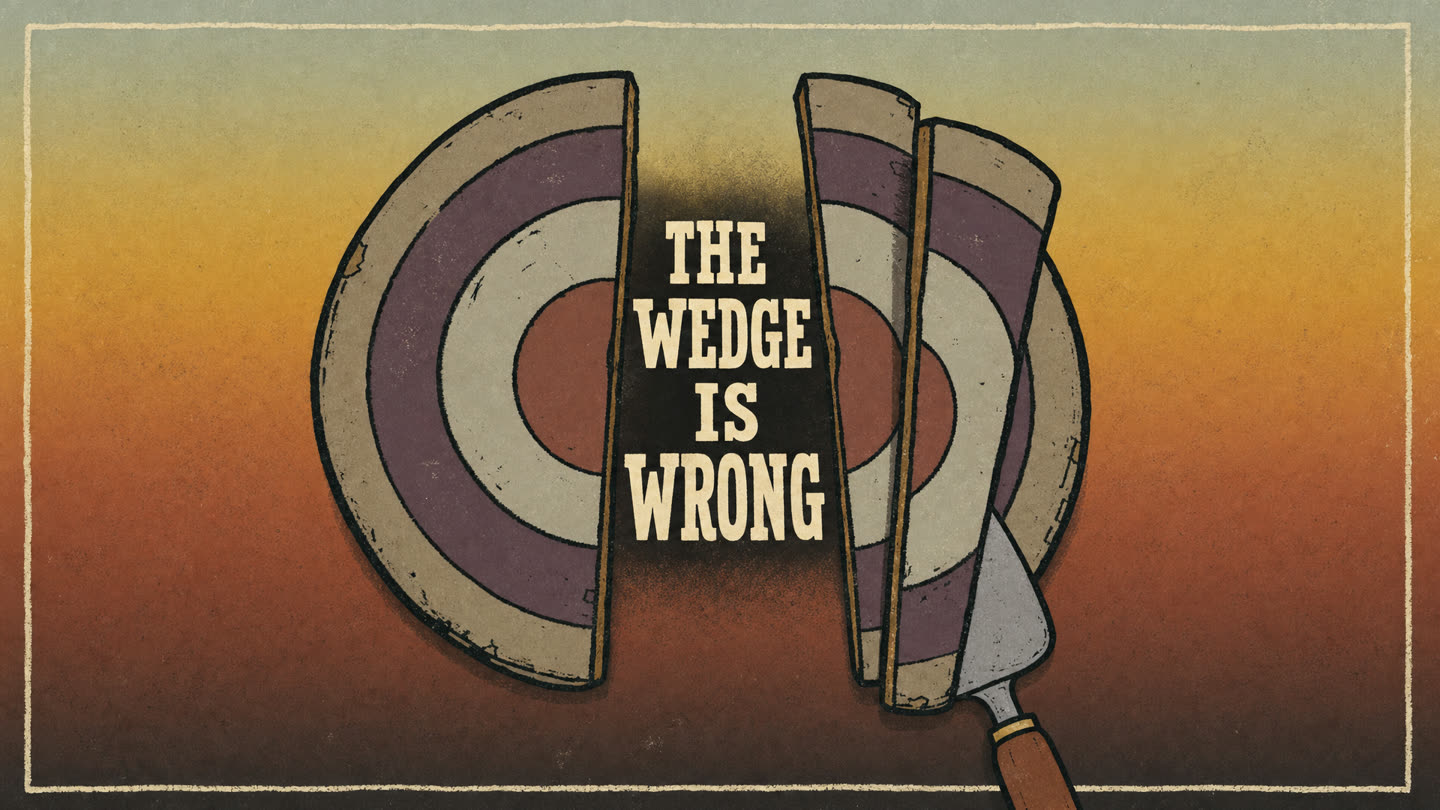
The triangle slice is the worst way to cut a round cake, and it has been the worst way since 1906.
Cutting a cake into equal pieces sounds like a solved problem until eight people are watching and two of them are counting.
Round cakes: the wedge is wrong
A round cake cut into wedges gives everyone the same slice only if you get every angle right, and you will not. A 10 percent error on one angle is 10 percent more cake, visible from across the table.
There is a second problem. Cut a wedge, take it, and you leave two exposed faces of sponge to dry out overnight.
In 1906, Francis Galton wrote to Nature proposing a different method: cut a full-width strip through the middle, take that, then push the two remaining halves together. The cake closes on itself and the cut faces are touching rather than facing the air. The next day you cut another strip at right angles.
For equal portions the strip method is also easier to judge. You are comparing two parallel lines, not two angles meeting at a point, and people read parallel lines far better than they read angles.
Square and rectangular cakes
Divide the long side, not both sides at once. Cut the whole tray into strips first, then cut across. Two easy judgments beat one hard one.
For an awkward number like six, cut in half first, then cut each half into thirds. Halving is the judgment you make best, so make it first and let it reduce the problem.
When the cake is already broken into
A round cake with two wedges gone is no longer a circle, and eyeballing the middle of what remains will be wrong every time, because the missing mass pulls your sense of centre toward the gap.
Find the two ends of the remaining arc, then cut toward the fat side of the midpoint between them. The same rule covers a pie with a slice out, a pizza, and a wheel of cheese.
The rules, short
- Halve first, then divide the halves. It is the judgment you are best at.
- Compare parallel lines, not angles.
- Cut all the strips before you cut across.
- On anything with a piece missing, aim fat of where the middle looks.
Cake is forgiving. If you want to know how far off your eye really runs, cut something and weigh both halves.